Introduction
Pet hair has a talent for turning up everywhere. It collects along baseboards, settles into the weave of a couch, and rides into the car on your clothes. For households with dogs, cats, or other furry companions, the question is rarely whether to vacuum but which tool makes the routine easier to keep up with.
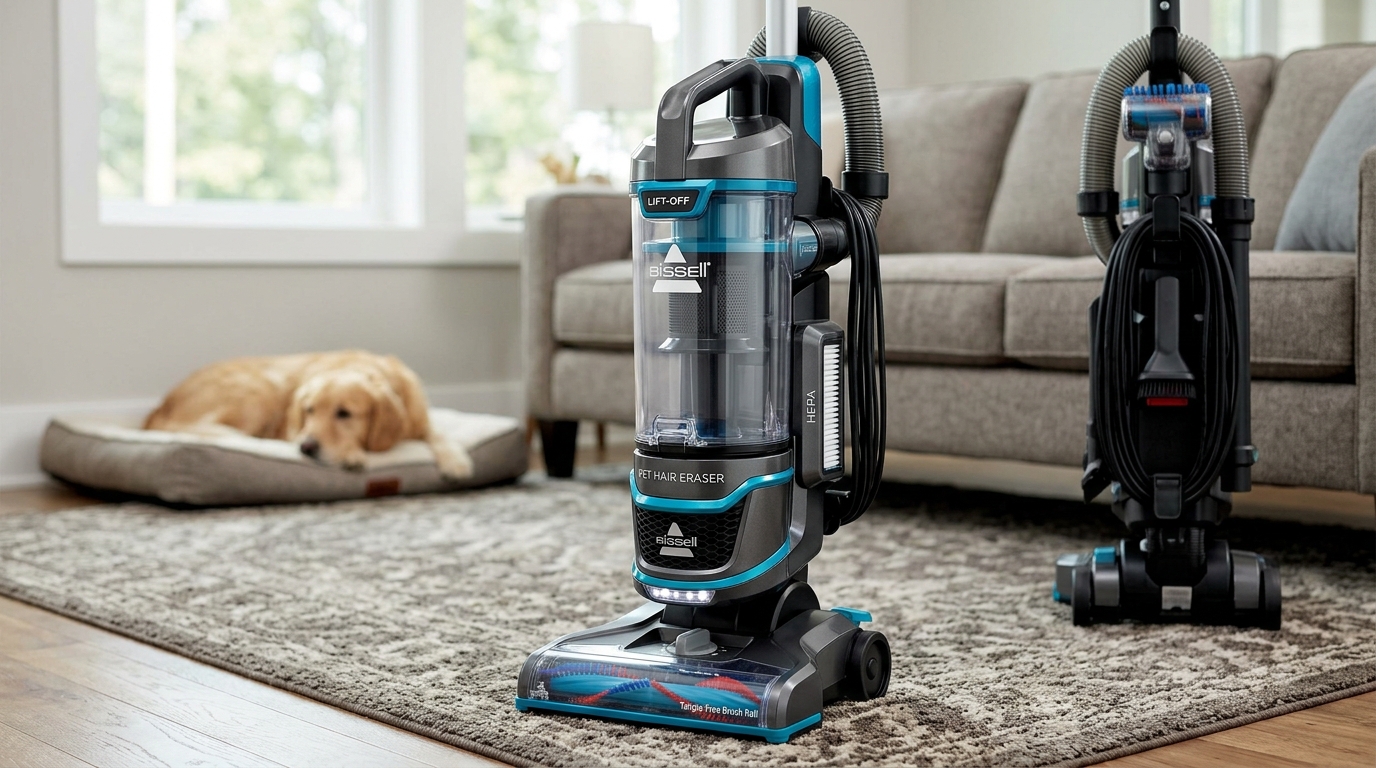
The Bissell Pet Hair Eraser Allergen Lift-Off Vacuum, model 39883, is one of the products shoppers meet when they search for a pet-oriented upright with filtration in mind. Going by its name, it combines three ideas: a design aimed at pet hair, a sealed approach to trapping allergens with a HEPA filter, and a “Lift-Off” feature that lets part of the machine detach for portable cleaning.
This article is an educational overview, not a verdict. It looks at what these features mean in practice, where such a vacuum can be useful around the home, and which questions are worth asking before you decide. Specifications and included accessories can change between listings and sellers, so confirm the exact details on the official product page.
First, a Quick Orientation
Vacuum cleaners fall into a few broad families, and this model belongs to the upright family. In an upright, the motor, dust container, and floor head sit in one tall body that you push in front of you. This format has stayed popular because it covers wide stretches of carpet quickly and usually offers a roomy dust container.
The Lift-Off idea adds flexibility. Instead of leaving you with a floor-only machine, the design lets a portion of the vacuum come away from the base so you can carry it and clean at a different height or angle. Many people see this as a way to get an upright and a portable cleaner from a single appliance.
The name also tells you something about the intended audience. “Pet Hair Eraser” is a product-line label that points to households with animals, and “Allergen” points to filtration. “HEPA” refers to a filter standard for capturing very fine particles.
The Main Features, Explained in Plain Terms
The Lift-Off Design
Think of the detachable section as a portable cleaner that happens to dock into an upright body. With the release engaged, you can lift the unit away from the base and carry it, and it can then be used with a hose and tools.
The practical value shows up in places a full upright cannot reach comfortably:
- Individual stair treads
- Sofa cushions and armchairs
- Pet beds and crates
- Car seats and cargo areas
- Window sills, shelves, and corners above floor level
Detaching the unit changes how heavy and how awkward the machine feels in your hands, so it is worth checking the listed weight and picturing how you would use it on a staircase or in a vehicle.
HEPA Filtration and a Sealed System
HEPA stands for High-Efficiency Particulate Air. A true HEPA filter is built to capture a very high share of microscopic particles that pass through it. Vacuum makers often pair such filters with a sealed system, meaning the airflow is designed to travel through the filter instead of leaking out through gaps in the housing.
This is relevant for homes with pet dander, dust, and pollen, since fine particles can otherwise be pushed back into the room. It helps to keep expectations realistic, though. A vacuum is a household cleaning tool, not a medical device, and it works best alongside other habits such as washing bedding, ventilating rooms, and grooming pets. People with allergies or respiratory concerns should talk with a qualified professional instead of relying only on a product description.
Pet-Oriented Cleaning Tools
Vacuums in the Pet Hair Eraser family typically come with at least one small tool aimed at upholstery and stairs, often a motorized or textured brush that agitates fabric so hair can be pulled loose. Models in this category often also include a crevice tool for narrow gaps and a wider tool for general surfaces.
Because accessory lists vary by listing, check the product page for exactly what is in the box. The tools matter more than they might seem, since a large portion of pet hair ends up on furniture rather than on the floor.
The Floor Head and Brush Roll
The floor head contains a rotating brush roll that stirs up carpet fibers so embedded hair and debris can be drawn into the airflow. Pet owners tend to notice two things about brush rolls. The first is how well they lift hair out of carpet. The second is how quickly hair wraps around the roller. No design is entirely immune to wrapping, so occasional clearing with scissors is a normal part of ownership for most people in any brand.
Many uprights also let you reduce or stop the brush roll for bare floors, which helps avoid scattering debris or scuffing delicate finishes. Look for this control on the product page and in the manual.
Bagless Dust Container
The listing and product family point to a bagless design. Debris collects in a transparent container that you empty into a bin, so there is no recurring cost for replacement bags. Seeing the contents also makes it clear when emptying is due.
The tradeoff is that emptying can release some fine dust and fur into the air if you tip it carelessly. Emptying slowly into a bin or a bag helps keep that under control.
Corded Operation
A model like this typically plugs into a wall outlet. A corded vacuum offers steady power and no battery runtime to worry about. In exchange, you need to plan around outlets, manage the cord as you move between rooms, and consider whether the cord length suits your home.
Everyday Ways to Put It to Work
Building a Simple Weekly Routine
Most households settle into a pattern. High-traffic zones such as the entryway, the kitchen, and the main living area get attention every few days, while bedrooms and guest rooms get a weekly pass. Homes with heavy shedders may want more frequent sessions, because shorter, regular cleaning often feels easier than occasional marathon efforts.
Working With Carpet and Rugs
Carpet holds onto hair more stubbornly than it appears. These habits tend to help with any upright:
- Move slowly so the brush roll has time to lift what is embedded
- Overlap strokes to avoid missed strips
- Make a second pass at a right angle on thick carpet
- Pay extra attention to spots where pets nap or rest
- Run along baseboards and under furniture, where hair gathers first
Bare Floors and Mixed Flooring
Many homes combine carpet, tile, laminate, and wood. On hard surfaces, using the right brush roll setting matters. Spinning bristles can fling larger debris or leave marks on delicate finishes. When in doubt, consult the manual and test the machine on a small area first.
Furniture and Pet Beds
This is where the portable unit and the pet tool come into play. Lifting the unit away and attaching a suitable tool lets you work across sofa cushions, along seams, and over pet beds. Check care labels on delicate fabrics and test an inconspicuous spot before cleaning the whole piece.
Stairs
Stairs can be one of the most tedious areas to clean with a full-size upright, since the machine cannot stand on a tread. A detachable design makes the job more manageable because you carry only the portable section. It still takes patience, since hair tends to collect in corners and along the edges of each step.
The Car
If your animals travel with you, seats and cargo areas fill up quickly. A portable unit can come outside for a quick pass, provided the cord reaches or you use a suitable extension cord. Some people prefer to keep a small cordless handheld for the car and use the upright for the house.
Seasonal Cleaning
Many animals shed more heavily in spring and autumn, which makes these good moments for a deeper clean. Moving light furniture, working under beds and sofas, and tackling curtains or throw cushions removes buildup that normal routines miss.
Who Might Find This Type of Vacuum Useful
No appliance fits every household, but certain situations line up well with this design.
Homes with shedding pets. The product line, the pet tools, and the hair-focused design all point toward dog and cat owners.
People who care about filtration. Households that pay close attention to dust and dander may want a sealed system with HEPA among their criteria.
Multi-level homes. A detachable portable section can ease the burden of cleaning stairs and upstairs rooms.
Mixed-flooring homes. Uprights with adjustable brush behavior can cope with carpet and bare floors in the same house.
Families who prefer corded power. Anyone who would rather skip battery management may like the steady performance of a plug-in machine.
Those who want one machine for several tasks. Between the floor head, the portable section, and the tools, a single appliance covers floors, furniture, and small spaces.
What to Weigh Before Deciding
Honest evaluation includes the points that might not suit everyone.
Weight
Uprights with detachable sections can feel heavier than simple stick vacuums. Look at the listed weight, think about your stairs, and consider who will use the machine most often. A lighter option may suit someone with limited strength or a small apartment.
Cord and Outlets
You will need an outlet nearby, and in larger homes you may need to switch outlets between rooms. Compare the listed cord length with the size of your space.
Storage
Uprights stand tall and take more room than compact handhelds. Think about where the machine will live and whether the height fits your closet or utility area.
Maintenance
Every vacuum performs best when maintained, and a sealed HEPA system depends especially on clean filters. Habits generally recommended include:
- Emptying the dust container before it is completely full
- Cleaning or replacing filters on the manufacturer’s schedule
- Clearing hair and thread from the brush roll
- Checking hoses and passages for blockages
- Following the manual’s guidance on any washable parts and drying times
A clogged filter or a full container reduces airflow in any vacuum, which is why upkeep matters more than any single feature.
Noise
Vacuums are loud. If you share walls, work from home, or have noise-sensitive animals, pick your cleaning times thoughtfully.
Filter Care and Replacement Parts
Filters are consumable or semi-consumable parts, and the exact type, cleaning method, and replacement schedule vary by model. Check the user guide and the product page so you know what to expect over time.
Realistic Expectations
No vacuum removes every hair in a single pass. Results depend on carpet type, how much your pets shed, how often you clean, and how well the machine is maintained. Reading the specifications, manual, and warranty terms gives a more accurate picture of what to expect.
How This Style Compares With Other Vacuum Categories
Understanding where an upright with a detachable section fits can make shopping less confusing. The following is a general comparison of categories, not a ranking of brands.
Traditional Uprights
Uprights cover large floor areas efficiently, especially carpet. They typically offer a wide head and a generous dust container. Their weight and storage footprint are the usual tradeoffs.
Uprights With Detachable Units
These try to combine the strengths of uprights and portable cleaners. The convenience for stairs and furniture is the main advantage, and the extra weight and mechanical complexity are the main points to consider.
Cordless Stick Vacuums
Stick models are light and quick to grab, which suits small messes and compact homes. Battery runtime and container size can limit them in larger households, so many people use them as a second vacuum.
Canister Vacuums
Canisters separate the motor and container from the cleaning head. This can make the head lighter and easier on stairs and bare floors, though the body must be pulled along and can be bulky to store.
Robot Vacuums
Robot models handle light, regular upkeep with little effort. They usually complement rather than replace a manual vacuum, since stairs, thick carpet, and heavier debris can be challenging.
Handheld Vacuums
Handhelds are small and useful for spills, sofas, and cars. They are not designed for whole-floor cleaning but make a convenient companion.
Small Habits That Make a Big Difference
These practices help with almost any upright vacuum:
- Clear the floor first. Socks, cords, string, and small toys can tangle in the brush roll.
- Overlap your strokes. This gives a more even result and avoids missed lines.
- Slow down on carpet. Slower passes give the brush roll and suction more time to work.
- Empty the container often. An overfilled container reduces airflow.
- Keep filters clean. Follow the manufacturer’s guidance, and let washable parts dry fully.
- Check the brush roll. Removing wrapped hair early protects the motor.
- Wash pet bedding regularly. Fabrics hold hair and dander that a vacuum cannot fully remove.
- Groom your pets. Regular brushing reduces how much hair reaches the floor.
Frequently Asked Questions
Is this vacuum intended for homes with pets?
The product name and line point to pet households. It is designed with pet hair in mind, though results vary with the type of fur, the surfaces, and how often you clean.
What does the “Lift-Off” feature mean?
It refers to a portable section that can be separated from the upright base so you can carry it for stairs, furniture, and other places the full machine cannot reach comfortably.
Does it have a HEPA filter?
The product name lists HEPA. For the exact filter type, cleaning method, and replacement schedule, refer to the manual or the manufacturer’s information.
Will it help with allergies?
A sealed system with HEPA filtration is designed to capture fine particles, which can support general dust and dander control. It is not a medical device, so people with allergies should seek personal guidance from a qualified professional.
Is it bagless?
Models in this family use a dust container that you empty, rather than disposable bags. Confirm the details on the product page.
Is it corded?
Yes, this type of vacuum is generally corded and needs to be plugged into an outlet during use.
Can it be used on carpet and hard floors?
Uprights of this kind are generally intended for several surface types. Brush roll settings matter on hard floors, so check the manual for the correct mode.
Can it be used on stairs and furniture?
The portable section combined with a hose and suitable tools is intended for stairs, upholstery, and similar places. Check the listing for the exact accessories included.
How often should the brush roll be cleaned?
There is no universal schedule. In homes with long-haired pets or residents, a quick check every few cleaning sessions is a sensible habit.
How often should filters be cleaned or replaced?
It depends on the model and how much you use it. The user guide gives the most reliable timing and instructions.
Is it a good fit for a small apartment?
It can work in an apartment, though weight and storage space are worth considering. Smaller homes with mostly hard floors may find lighter vacuum types equally practical.
What should I check before choosing a vacuum like this?
Review the weight, dimensions, cord length, hose reach, included accessories, filter details, warranty, and support options. Compare these with your floor types, home layout, and routine.
Final Thoughts
Living with pets means accepting a certain amount of fur and finding a routine that keeps it manageable. The Bissell Pet Hair Eraser Allergen Lift-Off Vacuum 39883 brings together a pet-focused design, a HEPA-equipped sealed approach to filtration, a detachable portable section, and tools for upholstery and tight spaces, all in a corded upright format.
Whether it is the right choice depends on your home. Floor types, the amount of shedding, the number of stairs, storage space, sensitivity to dust, and your preference for corded or cordless machines all play a part. Weighing those factors honestly, and understanding how vacuum categories differ, usually leads to a better decision than focusing on any single feature.