Introduction
Pet ownership brings a lot of joy, along with a steady stream of fur, dander, and the occasional unpleasant smell. Anyone who has tried to keep a sofa, a rug, and a hallway looking fresh while a dog or cat sheds nearby knows that a vacuum cleaner becomes one of the most-used tools in the house.
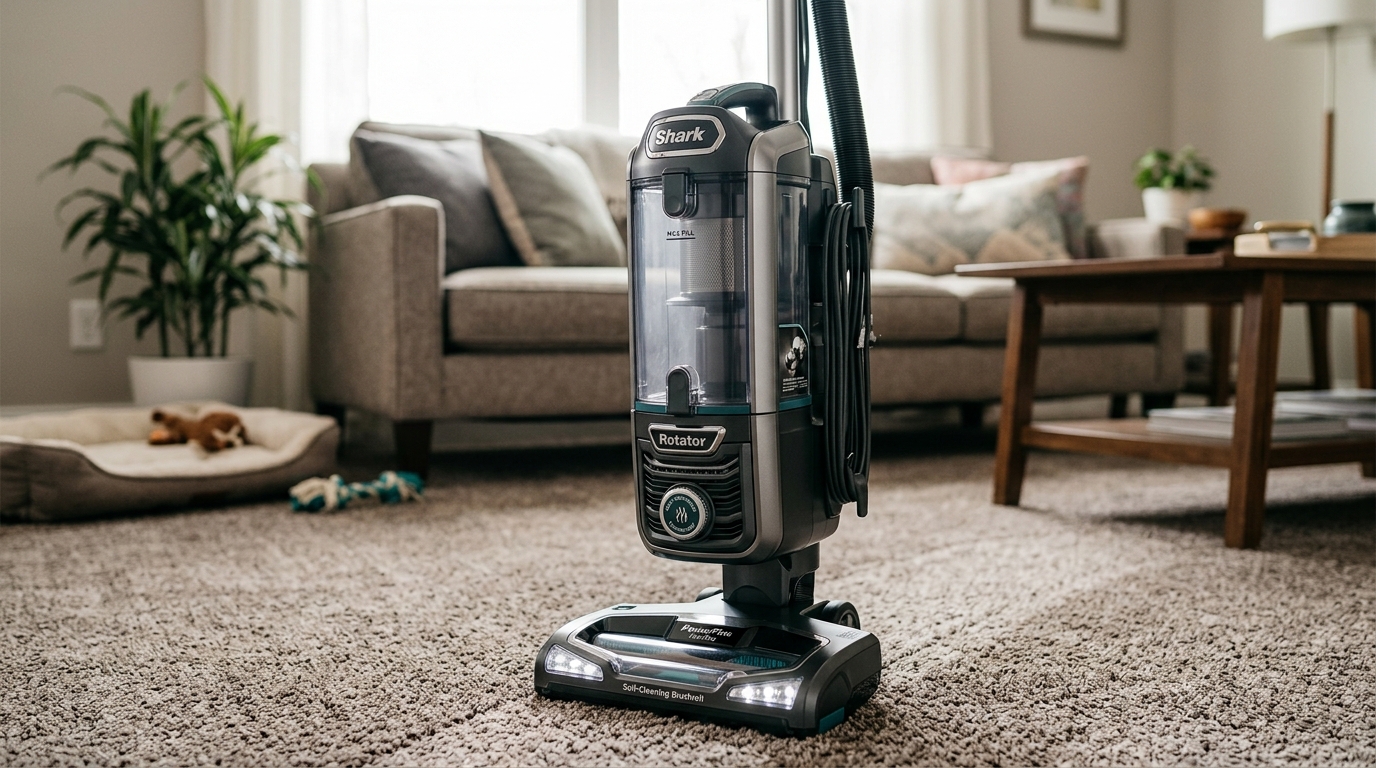
The Shark ZU102 Rotator Pet Upright Vacuum is a corded upright model aimed at this kind of household. Based on its listing, it features a PowerFins HairPro brushroll, odor neutralizer technology, a 2.9 L dust cup, and a Charcoal finish. These details suggest a design focused on two common pet-related frustrations: hair that wraps around the brush and lingering odors.
This guide takes an informational approach. It explains what these features generally mean, how the vacuum might fit into a daily or weekly routine, what types of homes it may suit, and which factors are worth weighing before choosing any upright vacuum. The aim is to give you enough background to decide whether this product matches your own space and habits.
Understanding the Product at a Glance
An upright vacuum combines the motor, dust container, and cleaning head into a single body. You hold the handle and push the unit across the floor, which makes it a familiar choice for people who clean larger areas of carpet or mixed flooring.
The ZU102 sits within Shark’s Rotator range, and the “Pet” label tells you it is positioned for homes with animals. According to the product title, three details define this particular version:
- PowerFins HairPro, a brushroll design intended to deal with pet hair
- Odor Neutralizer Technology, a feature aimed at reducing smells during vacuuming
- A 2.9 L dust cup, which sets how much debris the vacuum can hold before emptying
Exact specifications, accessories, and weight can differ between listings and regions, so it is a good habit to confirm the details on the official product page rather than relying on any single summary, including this one.
Key Features Explained
PowerFins HairPro Brushroll
The brushroll is the spinning part of the cleaning head that agitates carpet fibers and sweeps debris toward the suction channel. Traditional bristle brushrolls can collect long strands of hair, which wind around the roller and gradually reduce its effectiveness. Many owners of long-haired pets or households with long-haired residents have dealt with cutting hair out of a brushroll with scissors.
PowerFins HairPro is the name given to a brushroll built to address that issue. Rather than relying only on traditional bristles, designs of this type use flexible fins or a combination of fins and bristles to lift debris while limiting how much hair gets tangled. In practical terms, the goal is to reduce how often you need to stop and clear the roller by hand.
Even with a design focused on reducing hair wrap, no brushroll is entirely immune. Very long hair, thread, string, or fabric fibers can still collect on any roller, so occasional inspection remains a sensible habit.
Odor Neutralizer Technology
Pet households often notice that vacuums themselves can start to smell after repeated use, especially when picking up dander, litter, or debris from areas where animals spend time. Odor neutralizer technology is aimed at this issue. These systems generally rely on a built-in component, such as a replaceable cartridge or filter-based element, that releases a light scent or helps counteract smells as air passes through the vacuum.
A few points are worth keeping in mind:
- Odor features are meant to complement good cleaning habits, not replace them.
- If a smell comes from the carpet, a pet bed, or upholstery itself, the underlying cause may need separate attention, such as washing fabrics.
- Scented components may be a matter of personal preference. People who are sensitive to fragrances should read the product information carefully and decide whether the feature suits them.
- Replacement schedules for any odor-related component are set by the manufacturer, so the user guide is the right source for timing.
2.9 L Dust Cup
The dust cup is where collected debris ends up. A capacity of 2.9 liters is relatively generous for a household vacuum, which can reduce how often you have to empty it during a cleaning session. This matters most in homes with heavy shedders, where a cup can fill faster than expected.
Bagless designs let you see how full the container is and empty it directly into a trash bin. Many people find this convenient, since there are no bags to buy. The tradeoff is that emptying can send up a small cloud of dust if you are not careful. Emptying the cup slowly into a bin, ideally with a liner, helps keep dust under control.
Upright Design and Swivel Steering
Rotator-style uprights typically include a swivel steering design, which lets the cleaning head pivot more easily around furniture legs, corners, and other obstacles. Steering feel is partly subjective, as it depends on floor type, your height, and how you hold the handle, but a head that turns smoothly generally reduces the effort of changing direction during a session.
Multi-Surface Cleaning
As with most uprights in this category, the ZU102 is intended for both carpets and bare floors. Many models allow you to adjust settings or switch behavior depending on the surface. Reviewing the manual helps you use the right mode on delicate flooring, since a spinning brushroll can scatter debris or cause scuffing on certain hard surfaces if used incorrectly.
Charcoal Finish
The Charcoal color is a cosmetic choice. It does not change performance, but some people prefer neutral tones that blend into a utility closet or living area. If appearance matters to you, it is one of the smaller factors in the decision.
How It Can Be Used
Daily and Weekly Floor Maintenance
The most common use is regular floor cleaning. Many households find a rhythm that works for them, such as vacuuming high-traffic areas like entryways, kitchens adjacent to pet feeding spots, and living rooms every few days, while bedrooms and guest rooms are handled weekly. Homes with heavy shedding may need more frequent attention, while apartments with mostly hard floors may need less.
Managing Pet Hair on Carpets and Rugs
Pet hair tends to work its way into carpet fibers, where it can be difficult to remove with a quick pass. A few general habits can help with any upright vacuum:
- Move slowly over carpeted areas so the brushroll has time to lift hair.
- Overlap each stroke slightly to avoid missed strips.
- Vacuum along baseboards and under furniture, where hair gathers first.
- Make a second pass in a perpendicular direction on thicker carpet.
- Increase frequency during seasonal shedding periods, which often occur in spring and autumn.
Brushing your pets regularly outdoors or in an easy-to-clean area also reduces how much hair reaches the floor in the first place.
Hard Floors and Mixed Flooring
Many homes combine tile, laminate, or wood with area rugs and carpeted rooms. An upright with multi-surface capability can be convenient here, though technique matters. On hard floors, check whether your model lets you reduce or stop the brushroll, and follow the manufacturer’s guidance on settings to protect delicate surfaces.
Pet Zones and Odor-Prone Areas
Areas where pets eat, sleep, or play are often the source of odors. Vacuuming around dog beds, cat trees, litter box surroundings, and entry mats on a regular schedule can help limit how much dander and debris accumulate. The odor neutralizer feature is meant to support this routine, though washing pet bedding and cleaning litter areas remain important parts of keeping a home fresh.
Seasonal Deep Cleaning
Spring and autumn are traditional moments for a more thorough cleaning. Moving light furniture, vacuuming beneath sofas and beds, and cleaning along the edges of rooms can remove accumulated dust and hair that normal passes miss. A vacuum with a larger dust cup is helpful in these sessions, since the container fills quickly when you reach areas that have not been cleaned in a while.
Shared Homes and Rentals
For people living in shared houses or rentals, a dependable upright can simplify common-area cleaning. Since it is a stand-alone unit that does not rely on a battery, it can be used for long sessions without needing a recharge, which some people find useful when cleaning an entire floor in one go.
Who It May Be Suitable For
No vacuum is ideal for every household, but this style of product may appeal to certain groups.
Pet owners with shedding animals. The Pet designation, hair-focused brushroll, and odor feature suggest this model is aimed at dog and cat households in particular.
Households with long hair. Hair wrap is a common frustration for anyone with long hair, whether from pets or people. A brushroll built to limit tangling may be appealing in these homes.
Families with a mix of carpet and hard flooring. An upright that handles several surface types can reduce the need for multiple machines.
People who prefer corded power. Cordless models are convenient, but a corded upright does not depend on battery runtime, which can matter for larger homes or longer cleaning sessions.
Homes that value a large dust cup. Those who dislike emptying the container frequently may appreciate a higher capacity.
Anyone who wants a straightforward, familiar design. Uprights are simple to understand and use, with no steep learning curve.
Important Things to Consider
A balanced look at any product includes the factors that may not suit everyone.
Weight and Maneuverability
Upright vacuums are typically heavier than stick or handheld models. If you have limited strength, many stairs, or a small home where maneuvering a larger machine feels awkward, check the listed weight and think about how it fits your daily routine.
Stairs and Furniture
Depending on the configuration, an upright may not be as convenient on stairs or upholstery as a model with a detachable pod or a dedicated handheld. Check the product page to see which attachments and hose features are included, and consider whether you may need a separate small vacuum for those tasks.
Cord Length and Outlet Access
Because this is a corded model, you will need access to an electrical outlet. In larger homes, you may need to unplug and move to another socket between rooms. Compare the listed cord length with the size of the areas you plan to clean.
Storage Space
Uprights take up more floor space than compact vacuums. Think about where it will be stored and whether the height and footprint fit your closet or utility area.
Maintenance Habits
Any vacuum performs best when it is maintained. General habits include:
- Emptying the dust cup before it is completely full
- Cleaning or replacing filters according to the manufacturer’s schedule
- Checking the brushroll for hair, thread, or debris
- Inspecting the hose and air pathways for blockages
- Replacing odor-related components when the user guide recommends it
Skipping these tasks can lead to reduced suction, stronger smells, and a shorter product lifespan, regardless of brand.
Noise Level
Vacuum cleaners are generally loud. If your pets are easily startled or you live in a building with shared walls, consider choosing your cleaning times with that in mind.
Fragrance Sensitivity
Because odor-neutralizing technology may involve a scented element, people or pets that are sensitive to fragrance should read the manufacturer’s information and decide whether it suits their household.
Realistic Expectations
No vacuum removes every particle of hair or dust in a single pass. Results depend on carpet type, how much your pets shed, how often you clean, and how well the machine is maintained. Reading the official specifications, user manual, and warranty terms gives a more accurate sense of what to expect.
Comparing General Vacuum Categories
Understanding how an upright fits among other vacuum types makes the shopping process clearer. The following is a general comparison of categories, not a ranking of brands.
Upright Vacuums
Uprights are designed for whole-room cleaning, especially on carpet. They usually offer a wide cleaning head and a larger dust container. The tradeoffs often include more weight and a larger storage footprint.
Cordless Stick Vacuums
Stick vacuums are light and easy to grab for quick cleanups. Battery life and dust cup size can limit their use in large homes, so they often work well as a secondary vacuum or for smaller living spaces.
Canister Vacuums
Canisters separate the motor and dust container from the cleaning head, which can make the head lighter and easier to use on stairs and bare floors. They can be more awkward to store and require pulling the body behind you.
Robot Vacuums
Robot vacuums automate light daily maintenance and are popular for keeping floors tidy between deeper cleans. They usually complement, rather than replace, a manual vacuum, since they may struggle with thick carpets, stairs, or heavier debris.
Handheld Vacuums
Handhelds are compact and useful for spills, sofas, and cars. They are not designed for whole-floor cleaning but make a convenient companion.
Detachable and Hybrid Designs
Some uprights include a removable pod or canister section for added flexibility. These can handle stairs and furniture more easily, though they may add weight. Whether that tradeoff matters depends on your home’s layout.
Tips for Getting the Most From an Upright Vacuum
A few general habits can improve results with almost any upright:
- Pick up larger items first. Socks, toys, cords, and small objects can tangle in a brushroll.
- Work in overlapping lines. This helps avoid missed strips and gives a more even result.
- Slow down on carpet. A slower pass allows the brushroll and suction more time to work.
- Empty the cup regularly. An overfilled container can reduce airflow.
- Check filters on schedule. Following the manufacturer’s guidance helps maintain performance.
- Inspect the brushroll now and then. A quick look can prevent buildup that strains the motor.
- Coil the cord loosely. Tight winding can stress the cable over time.
- Treat the source of odors. Wash pet bedding, clean litter areas, and refresh fabrics alongside vacuuming.
Frequently Asked Questions
Is this vacuum designed for pet owners?
The product is listed under a pet-focused line and includes features such as a hair-oriented brushroll and odor neutralizer technology. These are intended to address common pet-related cleaning challenges, though actual results depend on your home and routine.
What is PowerFins HairPro?
It is the name given to the brushroll design on this model. The aim is to lift pet hair from carpets while limiting how much hair becomes wrapped around the roller. Specific details about its construction are best confirmed on the manufacturer’s page.
What does odor neutralizer technology do?
It is a feature meant to help reduce odors while you vacuum, typically through a built-in component that may need periodic replacement. It supports a cleaning routine rather than replacing it, so washing fabrics and cleaning pet areas still matter.
How large is the dust cup?
The listing mentions a 2.9 L dust cup. This is a fairly generous capacity for a household upright and can reduce how often you need to empty it during a cleaning session.
Is it bagless?
A dust cup design generally means the vacuum is bagless. Debris is collected in a container that you empty, instead of in disposable bags.
Can it be used on carpet and hard floors?
Uprights of this type are generally built for multiple floor types. Settings and technique matter, so check the manual for guidance on using the brushroll on hard or delicate surfaces.
Is it a cordless vacuum?
Based on the product category, it is a corded upright, which means it requires an electrical outlet during use. Confirm the cord length on the product page if your home has limited outlets.
Will it work well on stairs?
Upright vacuums can be less convenient on stairs than models with a detachable pod or a handheld attachment. Check which accessories are included and consider whether you may want a separate small vacuum for stairs and upholstery.
How often should I clean the brushroll?
There is no single schedule, since it depends on how much hair your household produces. A quick inspection every few cleaning sessions is a sensible habit, especially in homes with long-haired pets or people.
How often should I replace filters or odor components?
Schedules vary by model and usage. The user guide from the manufacturer is the most reliable source for timing and instructions.
Will it help with allergies?
Vacuuming regularly can help reduce household dust and dander, but a vacuum is not a medical device. People with allergies should check the filtration details on the product page and speak with a qualified professional for personal guidance.
Is it suitable for small apartments?
It can be used in apartments, though storage space and weight are worth considering. Smaller homes with mostly hard floors may find lighter vacuum types equally practical.
What should I check before choosing a vacuum like this?
Review the dimensions, weight, cord length, included accessories, filter details, warranty terms, and customer support options. Compare these with your floor types, home layout, and cleaning habits.
Conclusion
Keeping a home comfortable while living with pets is an ongoing effort, and the right tools can make it more manageable. The Shark ZU102 Rotator Pet Upright Vacuum brings together a hair-focused PowerFins HairPro brushroll, odor neutralizer technology, a 2.9 L dust cup, and a Charcoal finish in a traditional corded upright format.
Whether it suits you depends on your own situation. Floor types, the amount of shedding, how many stairs you have, storage space, and your preference for corded versus cordless vacuums all play a role. Thinking through those factors, and understanding how upright vacuums compare with other categories, usually leads to a more confident decision than focusing on any one feature.